
Why is High-frequency Fatigue Testing Important in Research
2025-05-17
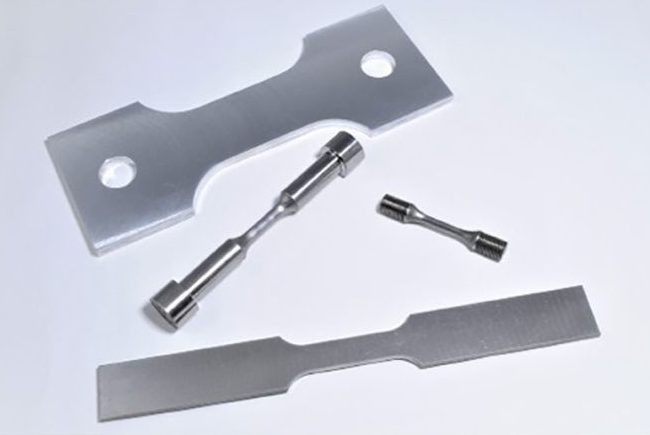
High-frequency fatigue testing typically operates at frequencies from 50 Hz to 300 Hz or even higher, far exceeding those of traditional hydraulic servo equipment (generally 1–30 Hz). For example, at 100 Hz, over 8.6 million cycles can be completed in a single day, significantly reducing the time cost of high-cycle fatigue testing.
For materials requiring a large number of cycles (e.g., 10⁶–10⁷) to determine lifespan, this means that tests that would previously take months can be completed in just a few days, greatly accelerating the pace of research and engineering verification.

By applying high-frequency loading, researchers can quickly construct stress-life (S-N) curves for materials, determining key indicators such as fatigue limit, crack initiation life, and crack propagation rate.
These data are fundamental for assessing material durability and predicting component life, and are indispensable, especially in the design of critical components such as aero-engine blades and automotive suspension systems.High-frequency testing is particularly suitable for high-strength steel, titanium alloys, high-strength aluminum alloys, and materials that have undergone surface strengthening treatments such as laser peening and mechanical peening.
These materials are widely used in aerospace, rail transportation, and other fields, and their fatigue resistance is directly related to structural safety. High-frequency testing can not only verify the effectiveness of performance improvements but also provide rapid feedback for the development of new processes.